Chase offers a range of business cards, and it can be difficult to sort through the details to figure out which is best for your business. I spent a lot of time poring over the details before ultimately going with a Chase Ink Unlimited card.
Chase Ink Unlimited vs Ink Business Cash: The No Annual Fee Cards
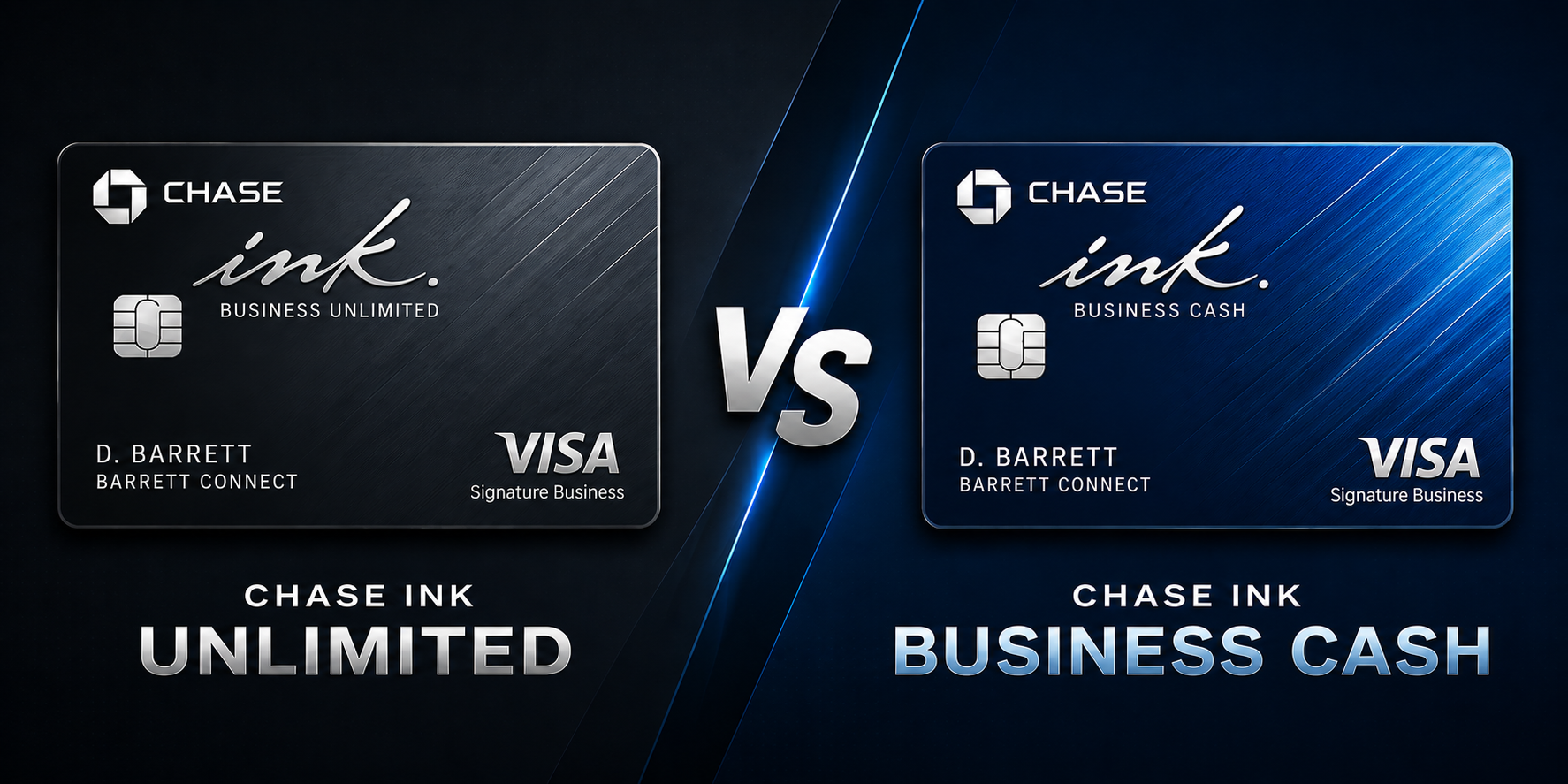
The Ink Unlimited, and the Ink Business Cash are Chase’s two no annual fee cards, and both provide pretty great value. Both offer $750 cashback after spending $6,000. They’re a great deal for a card with no annual fee, and the $6k spend is fairly easy to meet, even for small businesses.
The difference between these two cards is in the earn categories. While the Ink Unlimited offers 1.5% cashback on all purchase, the Ink Business Cash gives 5% back on “purchases made at office supply stores, Internet, cable and phone services” (on up to 25,000 in spend per year).
So the choice here is actually pretty simple: Is your business a more traditional business with a brick and mortar location, and a need for office supplies, making the 5% offer worthwhile? Or would you prefer to earn 1.5% unlimited cashback across every category of spending?
I have a small business with no office/retail space, and wanted to avoid an annual fee, so I went with the Ink Unlimited card. But see the options below if you’re looking for larger rewards, or a true high roller card!
Chase Ink Business Preferred, Ink Business Premier & Sapphire Reserve for Business: Higher End Cards with Annual Fees
Chase has a lineup of 3 business card with annual fees:
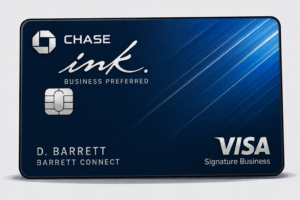
Chase Ink Business Preferred Card
The Ink Business Preferredhas a $95 annual fee, and offers 100,000 bonus points/ $1,000 cashback after spending $8,000.
You’ll earn 3x points/ 3% cashback on the first $150,000 spent in combined purchases each account anniversary year on: Internet, cable and phone services, Travel, Shipping purchases, Advertising purchases with social media sites and search engines. This is a wider range of boosted earn than the Business cash, and can be lucrative if you spend heavily on online advertising.
Chase Ink Business Premier Card
The Ink Business Premier has a $195 annual fee, and offers $1,000 cashback after spending $10,000.
The earning setup for the Premier card is a little different, and won’t suit everyone: you’ll earn unlimited 2.5% cashback on every purchase of $5,000 or more, and unlimited 2% cashback on all other business purchases, with no limits. You’ll also get 5% back on Chase Travel.
While there are some situations in which this card might be more valuable, with no extra benefits or credits offered, I’m not sure the $195 annual fee is worth it.
Chase Sapphire Reserve for Business Card
The Sapphire Reserve for Business has a hefty $795 annual fee, and offers 150,000 bonus points/ $1,500 cashback after spending $20,000. The fee is partially offset by a $300 credit on any travel purchase each year.
Beyond the annual fee for this card, you’ll want to make sure that you can meet the large spend requirement for the bonus.
This is a travel focused card, so most of the higher earn categories are travel related, including 8x points/ 8% cashback on Chase Travel bookings, and 5x points/ 5% cashback on Lyft rides. Of note outside of travel is the 3x points on social media and search engine advertising.
You’ll also gain access to Chase’s Sapphire airport lounges (they’re great!), two $250 credits towards Chase’s The Edit hotel bookings (expensive hotels, so this is more like a small coupon). The non travel credits include $200 to Google Workspace, and $400 at Ziprecruiter. Theoretically this card offers enough value to recoup the annual fee, it simply depends on your spending needs.
I have the personal version of the Sapphire Reserve card, and am a little torn on value for the high fee. One upside of applying for the business version of the card is that the annual fee can be deducted as a business expense.
You’d be surprised how many people are eligible for a business credit card. If you earn self employment money through a side hustle, even something as small as selling items on eBay, you’re eligible for a business credit card. You do not need a EIN to apply, card issuers will accept your Social Security number.
Signup bonuses for business credit cards can be lucrative, so those deep into the miles and points game will often apply for business credit cards.
Why are some bonus offers shown in points, while others are shown in dollars?
The display of points vs cash offers seems to be somewhat arbitrary, as all cards are awarded bonuses in the form of points, which can then be redeemed for cashback applied to your statement.
So don’t be confused when you see an offer in points–The Ink Business Preferred’s 100,000 point offer is the same as $1,000 cashback.
Chase’s Ultimate Rewards points have a value of 1 cent per point, so 10,000 points equals $100. However, these can be more valuable when redeemed for travel, especially when transferred to airlines for miles–something to keep in mind as you decide how to redeem your rewards.
Why are some earn rates shown in points multipliers like 3x, while others are shown in percentages?
The same logic as the bonus offers applies here. Across all the Chase business cards, earnings will be awarded as points, but can be redeemed for cashback. So a 3x earn rate is the same as 3% cash back.